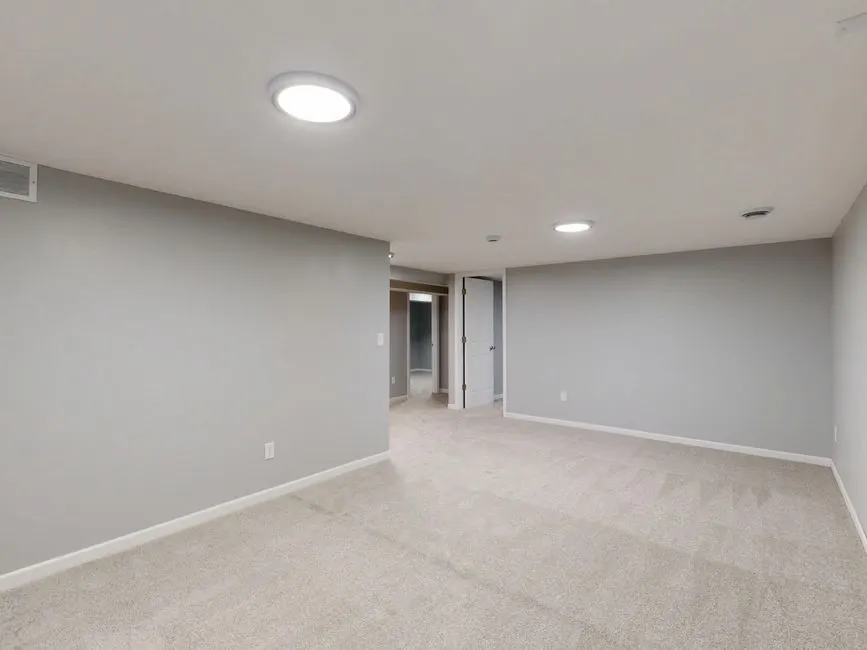
Your basement keeps growing mold after it rains because water is still entering the space and the air down there never fully dries out. Mold needs three things to return: moisture above 60% relative humidity, organic material like drywall paper or wood framing, and about 24 to 48 hours of standing damp. In Panorama City, California, the rain itself is rarely the whole story. The water that gets in during a storm stays trapped, and that trapped moisture feeds a new colony within days.
Below we break down exactly how rain water reaches a Panorama City basement, why bleach-and-paint fixes fail, what sump pump failure looks like, and what it costs in 2026 to fix it for good.
Why does my basement keep growing mold after it rains in Panorama City, California?
Basement mold after rain in Panorama City, California is a drainage and ventilation problem, not a cleaning problem. The San Fernando Valley gets its rain in concentrated bursts between November and March, and a single atmospheric river can drop two inches in a day. That water has to go somewhere. When the soil around your foundation is already saturated, it pushes against the basement wall and finds the weakest point - a hairline crack, a failed window well, a floor drain that backs up.
Once that water is inside, Panorama City basements dry slowly. Many were built between the 1940s and 1960s with minimal vapor barriers and no mechanical ventilation. A damp concrete floor can hold moisture for two to three weeks after a storm. That is more than enough time for mold spores that were already dormant in the dust to colonize.
If you have had us out before, you know we treat this as a water problem first and a mold problem second. That order matters. Cleaning mold without stopping the water is like mopping a floor while the tap is running.
The four ways rain water actually reaches your basement
In the homes we inspect across Panorama City, basement moisture after rain almost always traces back to one of four entry points. Finding which one applies to you is the difference between a permanent fix and another mold bloom next February.
1. Hydrostatic pressure through the foundation wall
Concrete is porous. When the ground outside is soaked, water pressure builds against the wall and pushes moisture through it. You will see it as a dark stain along the base of the wall, white chalky efflorescence, or paint that bubbles and peels. This is the most common cause of recurring basement mold in older Panorama City homes.
2. Failed or missing exterior drainage
Gutters that dump water at the foundation, downspouts that end two feet from the house, and grading that slopes toward the wall all send roof water straight down into the soil around your basement. A single clogged downspout can push hundreds of gallons into the wrong place during one storm.
3. Window wells and stairwells
Basement windows and exterior stairwells act like funnels. If the well is not drained or covered, rain fills it and seeps through the frame. We see this constantly on the older ranch-style homes near Chase Street and Van Nuys Boulevard.
4. Floor drains and sewer backups
During heavy rain, the municipal system can surcharge. Water comes up through your floor drain instead of going down. That is a different problem from a wall leak and needs a different fix, usually a backwater valve.
For a deeper look at what is growing and how far it has spread, a Basement Mold Inspection in Panorama City, California will map the moisture and identify the species before we touch anything.
Why cleaning the mold never stops it coming back
Bleach kills mold on a non-porous surface like tile or glass. On drywall, wood, and concrete, it does not. The bleach evaporates before it penetrates, so the roots survive and the colony returns within two to three weeks of the next rain.
Painting over mold is worse. The paint traps moisture against the wall, the mold eats the paint film from behind, and you get peeling plus a bigger colony. We have pulled baseboards off walls where three coats of mold-killing paint had been applied and found active growth six inches up the drywall.
What actually works is removing the water source, drying the structure to below 15% moisture content, then removing the contaminated material. Porous items like drywall, insulation, and cardboard cannot be cleaned - they have to come out. That is what professional Mold Remediation Company in Panorama City, California work looks like when it is done properly.
Sump pump failure is the number one repeat offender
If your basement has a sump pump and mold keeps coming back, test the pump before you do anything else. In our experience, sump pump failure mold Panorama City calls spike every January and February, right after the first big storm of the year.
The failure modes are predictable:
- Power loss. The storm that floods your basement is the same storm that knocks out power. Without a battery backup, the pump is dead when you need it most.
- Frozen or blocked discharge line. The line exits the house and can freeze or clog with debris. The pump runs, water has nowhere to go, and it cycles until it burns out.
- Stuck float switch. Sediment and grit jam the float. The pump never turns on.
- Age. Most sump pumps last 7 to 10 years. If yours is older and you cannot remember installing it, replace it before the next rainy season.
A failed pump means standing water in the pit, and standing water means mold within 48 hours. Test yours by pouring a bucket of water into the pit and watching whether it triggers and drains. If it does not, that is your answer.
How long mold takes to grow after a heavy rain
Mold growth starts within 24 to 48 hours of a moisture event. Visible colonies usually appear in 5 to 10 days. That timeline is why the first 48 hours after a storm matter more than anything else you do.
Here is what the drying curve looks like in a typical Panorama City basement:
- 0 to 24 hours: water is present, humidity climbs above 70%. Spores begin to germinate.
- 24 to 48 hours: colonies establish on drywall paper, wood studs, and cardboard. Odor starts.
- 48 hours to 7 days: visible growth. Drywall softens and loses structural strength.
- 1 to 3 weeks: mold spreads into wall cavities and under flooring. Remediation cost roughly doubles compared to the 48-hour window.
If you can get fans and a dehumidifier running within a day of the storm, you can often prevent the bloom entirely. If it has been a week, you are past prevention and into removal.
Common mistakes that make basement mold worse
We see the same handful of mistakes over and over when homeowners try to handle basement mold after heavy rain in Panorama City homes on their own.
- Spraying bleach and calling it done. It kills surface mold and leaves the roots. The colony returns.
- Running a fan without a dehumidifier. In a closed basement, a fan just moves humid air around. You need to pull the moisture out, not stir it.
- Sealing the wall before it dries. Water-based waterproofing paint over a damp wall traps moisture and accelerates rot behind the coating.
- Ignoring the smell. A musty odor without visible mold usually means growth inside the wall cavity. By the time you see it, the repair is bigger.
- Storing cardboard and fabric on the floor. These are mold food. Get them onto shelves at least 6 inches off the concrete.
- Assuming one storm was a fluke. If it happened once, it will happen again. Fix the drainage before the next rainy season.
If you want to know whether the air in the space is already contaminated, Air Quality And Mold Testing in Panorama City, California gives you a spore count you can compare against an outdoor baseline.
When to call a professional
Call us when the mold covers more than 10 square feet, when you can smell it but cannot see it, when the same wall has grown mold twice in one rainy season, or when anyone in the house has asthma or allergies that flare up downstairs.
Those four situations are past the DIY stage. At that point, the fix is a two-part job: stop the water, then remove the growth. We handle both. Our team finds the entry point, corrects the drainage or sump issue, contains the affected area, removes the contaminated material, and verifies the result with clearance testing.
If you have been searching for Mold Remediation Near Me in Panorama City, California after a storm, that is exactly the call we take most often between November and March. We are also set up for 24 Hour Mold Removal in Panorama City, California when water is still actively coming in and you cannot wait until morning.
Frequently Asked Questions
Why does my basement keep growing mold after it rains in Panorama City, California?
Because water is still entering and the space is not drying out. Mold returns within 24 to 48 hours of any moisture event. In Panorama City, the usual culprits are foundation seepage, failed exterior drainage, and sump pump problems. Fix the water source first, then remove the growth.
How do I stop basement mold after rain in Panorama City, California?
Stop the water, then dry the space within 48 hours. Clean gutters, extend downspouts 6 feet from the foundation, test your sump pump, and run a dehumidifier set to 50% relative humidity. If mold has already appeared, removal plus drainage correction is the only permanent fix.
Does basement waterproofing prevent mold in Panorama City?
Yes, when it is done on the correct side of the wall. Interior drainage systems and exterior waterproofing both stop water from reaching the basement. Waterproofing alone does not remove existing mold - you need remediation first, then waterproofing to keep it from returning.
Is basement mold after rain covered by insurance in Panorama City, California?
Usually only if the mold resulted from a sudden covered event, like a burst pipe or appliance failure. Gradual seepage from rain and poor drainage is typically excluded. Most standard policies cap mold coverage at $10,000 or less. Check your policy and document everything with photos before cleanup.
Who removes basement mold near me in Panorama City?
Our team does. We handle inspection, testing, containment, removal, and clearance verification for basements across Panorama City and the surrounding San Fernando Valley. Call (833) 929-5837 and we will schedule an assessment, usually within 24 hours.
Get help with Mold Remediation Service in Panorama City
If your basement has grown mold after the last storm and you are tired of cleaning the same wall every winter, we can stop it at the source. We handle the water problem and the mold problem together, so it does not come back next rainy season.
Call (833) 929-5837 to schedule your basement assessment. We serve Panorama City and the surrounding San Fernando Valley, and we will tell you upfront what the job takes.